Increase and decrease
Percentage change, growth and decline, repeated changes, and how to compare them fairly.
 Increase and decrease
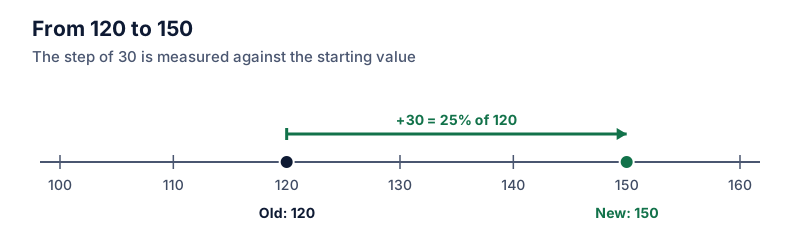
How to calculate percentage increase
Subtract the old value from the new one, divide by the old value, and multiply by 100. Worked examples with prices, rent and scores, plus a quick way to check the answer.
 Increase and decrease
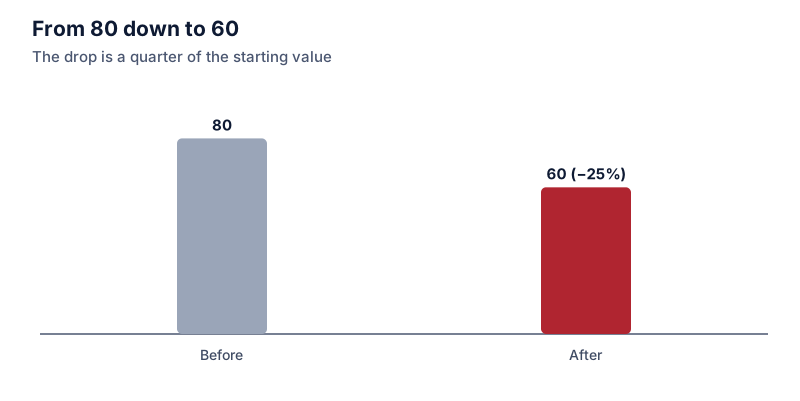
How to calculate percentage decrease
Percentage decrease is the drop divided by the starting value, times 100. Examples, why decreases can't pass 100%, and why a decrease and the matching increase aren't the same size.
 Increase and decrease
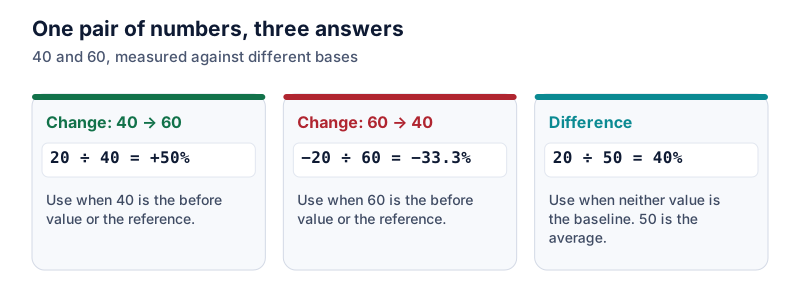
Percentage change vs percentage difference: which one to use
Use percentage change when one value is clearly the starting point, and percentage difference when neither is. The same pair of numbers worked both ways.
 Increase and decrease
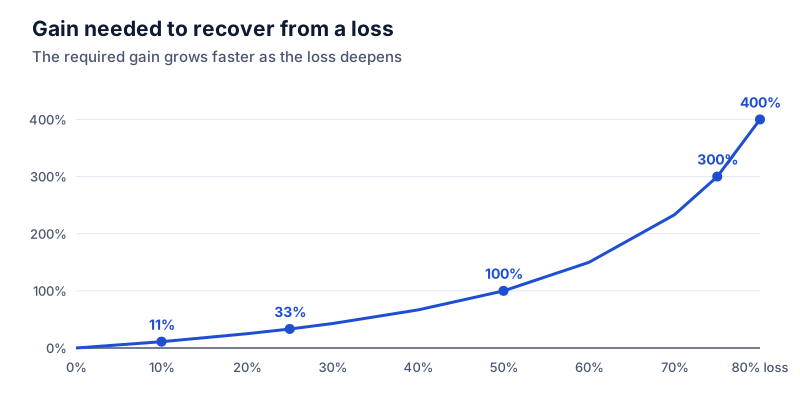
Why a 50% loss needs a 100% gain to break even
A 50% loss needs a 100% gain to get back to even. Why equal percentage moves don't cancel, a recovery table from 5% to 90%, and the formula behind it.
 Increase and decrease
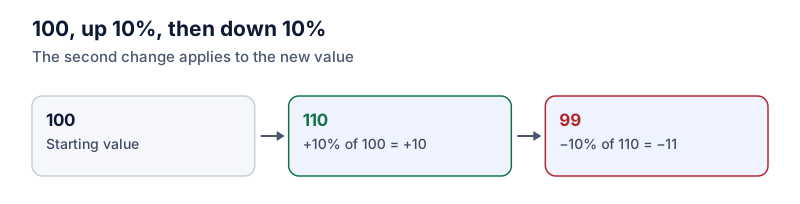
Successive percentage changes: why +10% then −10% isn't zero
To combine percentage changes, multiply their multipliers instead of adding the percentages. Why +10% then −10% leaves you 1% down, with a formula you can reuse.
 Increase and decrease
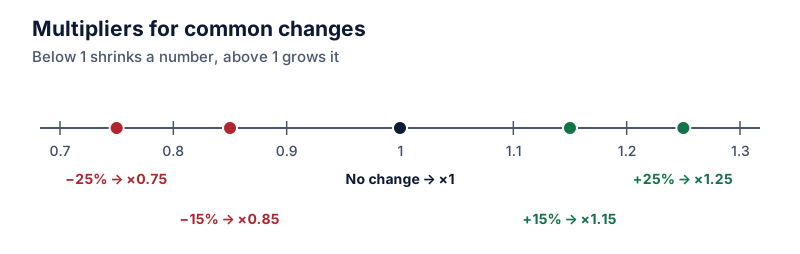
How to increase or decrease a number by a percentage
To add a percentage to a number, multiply by 1 plus the percentage; to take it off, multiply by 1 minus it. One step instead of two, with examples.
 Increase and decrease
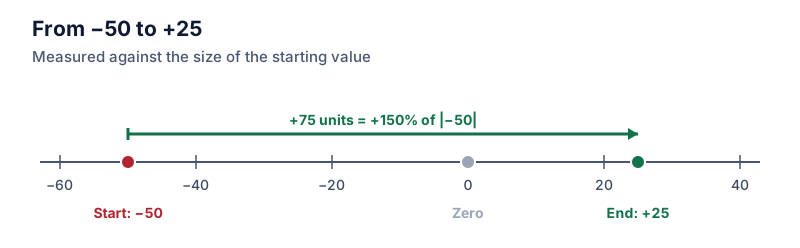
How to calculate percentage change with negative numbers
When the starting value is negative, the standard percentage change formula flips the sign. The absolute-value fix, what it means, and when to report the change in units instead.
 Increase and decrease
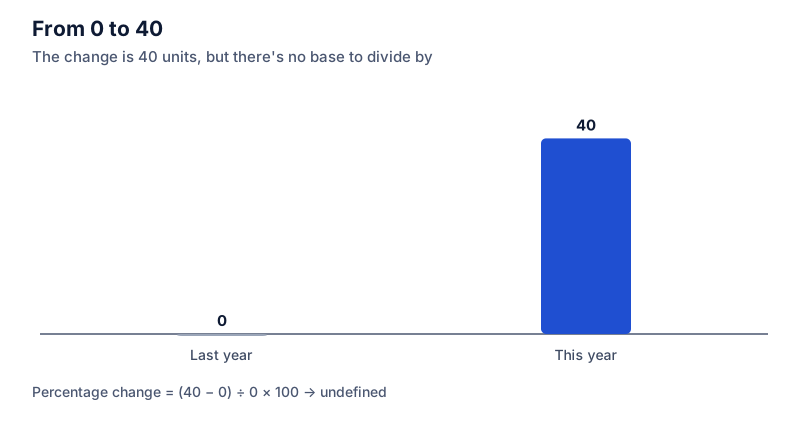
Percentage change from zero: why it's undefined and what to report
A percentage change from zero is undefined because you can't divide by zero. Here's what analysts report instead, from absolute change to new-from-zero labels.
 Increase and decrease
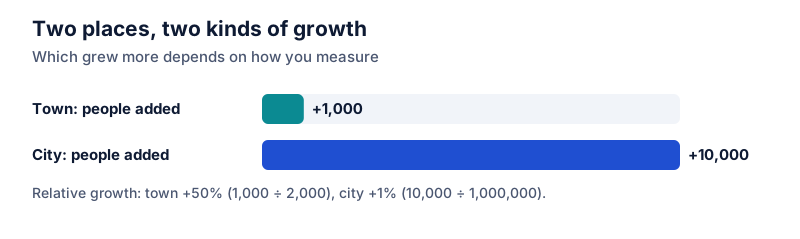
Absolute vs relative change: comparing growth of different sizes
Absolute change is the difference in units; relative change is that difference as a percentage of the start. How one change can look big or small depending on which you report.
 Increase and decrease
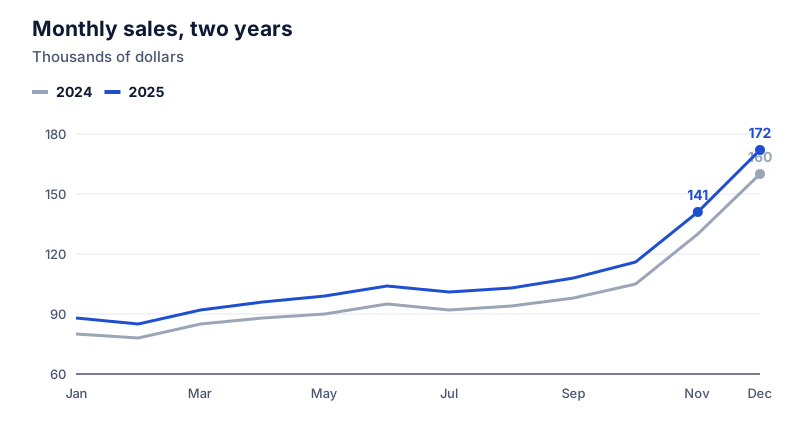
Year-over-year vs month-over-month growth: how to calculate and read them
Year-over-year compares a month with the same month a year earlier; month-over-month compares it with the month before. Both calculated on one dataset, with seasonality and compounding explained.