Work and everyday
Project progress, utilization, overtime, recipes and quick estimates without a calculator.
 Work and everyday
How to calculate project completion percentage
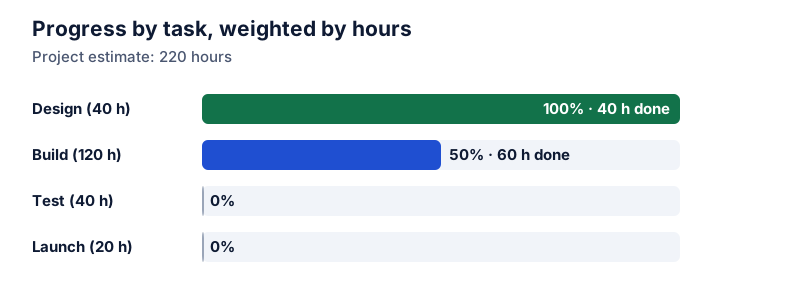
Percent complete = work done ÷ total work × 100. Weight tasks by effort, not by count: a project with 1 of 4 tasks finished can be 45% done. Worked example, formulas, and common reporting pitfalls.
 Work and everyday
How to measure a productivity change as a percentage
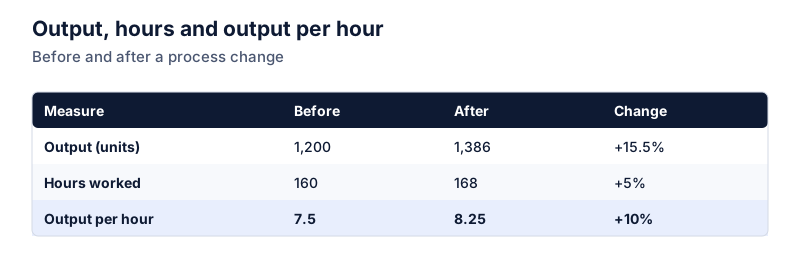
Measure productivity as output per hour, then compare before and after. Output up 15.5% with hours up 5% is a 10% productivity gain, not 15.5%. Worked example and formula.
 Work and everyday
Utilization rate: how to calculate it for people and equipment
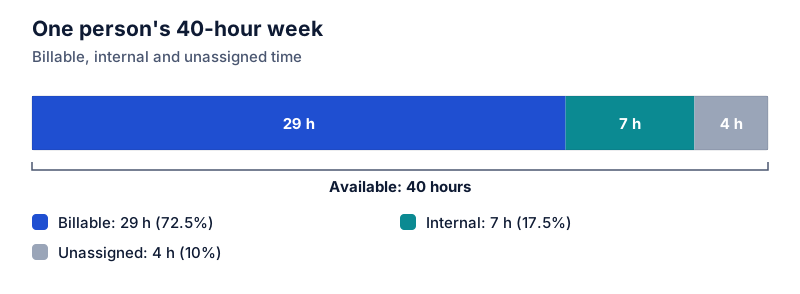
Utilization rate = hours worked on target work ÷ available hours × 100. Worked example for a 40-hour week with billable and non-billable time, how to choose available hours, and why 100% is not the goal.
 Work and everyday
How to calculate a survey response rate
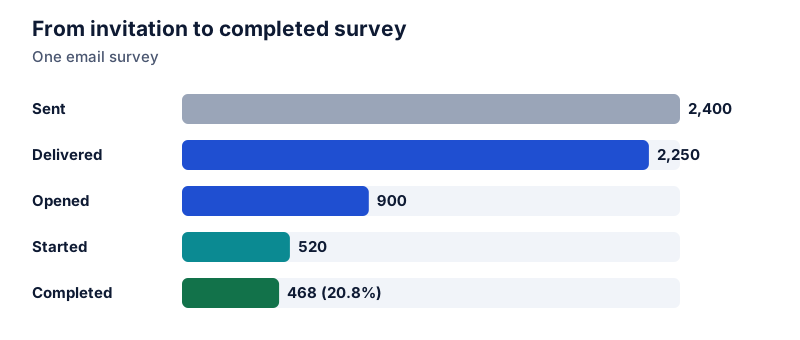
Survey response rate = completed responses ÷ people successfully invited × 100. Worked example from 2,400 invitations to 468 completes, plus completion rate, partial responses, and what the rate does and doesn't tell you.
 Work and everyday
How to calculate progress toward a goal
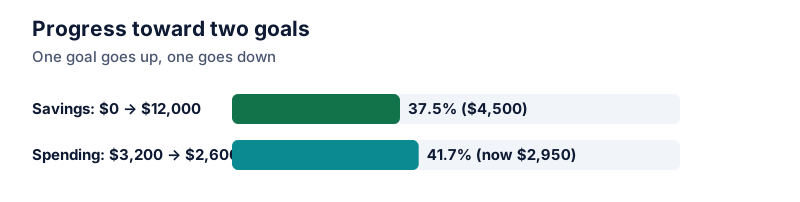
Goal progress = (current − start) ÷ (target − start) × 100. It works for goals that go up, like savings, and goals that go down, like cutting costs. Worked examples for both, plus common mistakes.
 Work and everyday
Quick percentage estimates without a calculator
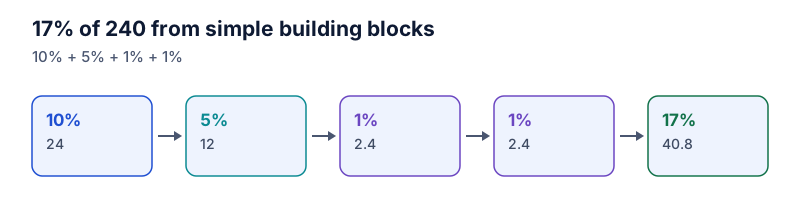
Build any percentage from 10%, 5% and 1%. 17% of 240 = 24 + 12 + 4.8 = 40.8. Plus the swap trick (8% of 50 = 50% of 8), quick fraction equivalents, and how to estimate changes without a calculator.
 Work and everyday
How to work out time as a percentage of a day or week
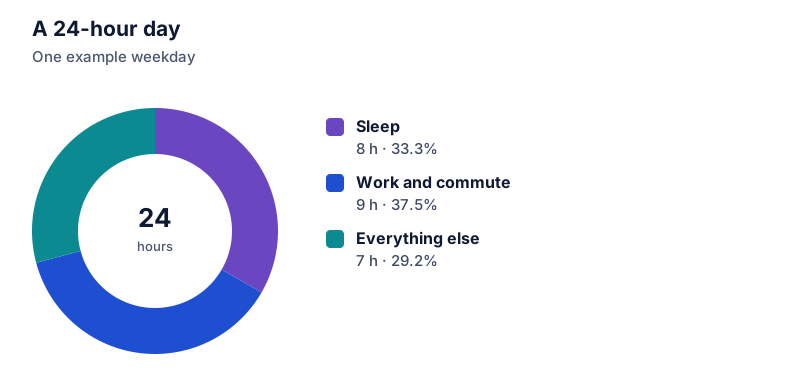
Time as a percentage = part of the time ÷ total time × 100, with both in the same unit. 8 hours is 33.3% of a day, 40 hours is 23.8% of a week, 45 minutes is 9.4% of an 8-hour workday.
 Work and everyday
How to scale a recipe up or down by a percentage
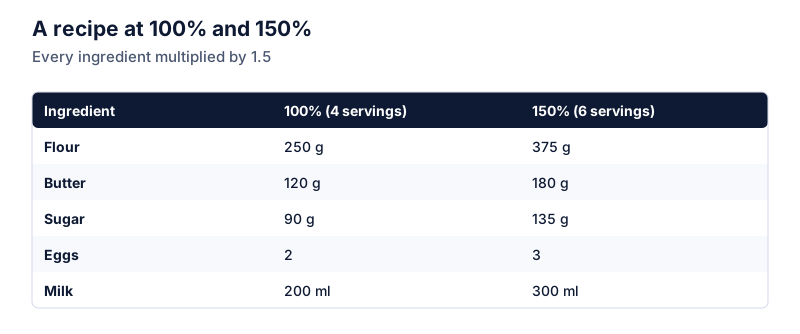
Scale a recipe by multiplying every ingredient by the same factor: 150% means × 1.5, 75% means × 0.75. Worked example, converting servings to a percentage, and what not to scale directly.
 Work and everyday
Shrinkflation: how to calculate the hidden price increase
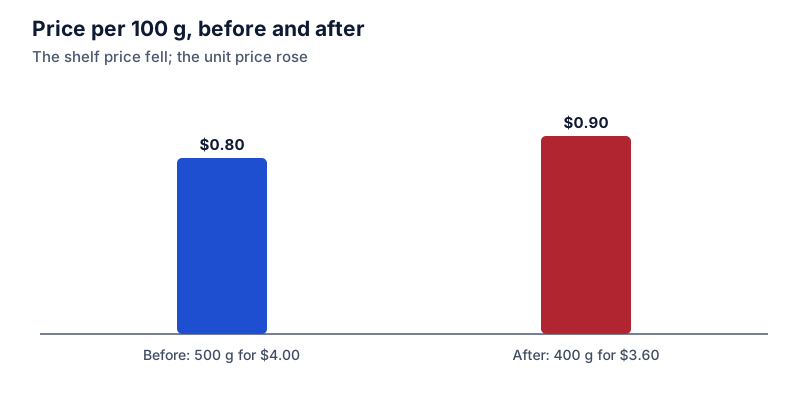
When a package shrinks, compare unit prices, not shelf prices. 500 g for $4.00 to 400 g for $3.60 looks like a 10% price cut but is a 12.5% increase per gram. Formulas and worked examples.
 Work and everyday
Overtime pay: time and a half and other pay rate percentages
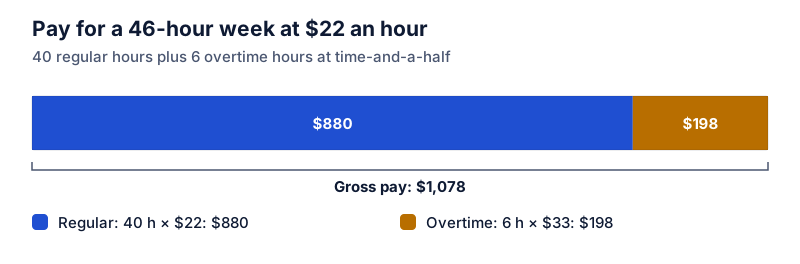
Time-and-a-half means 150% of your hourly rate. At $22 an hour, overtime is $33, and 46 hours pays $1,078. How to check overtime on a paycheck, double time, and what share of your pay came from overtime.