Shrinkflation: how to calculate the hidden price increase
When a package shrinks, compare unit prices, not shelf prices. 500 g for $4.00 to 400 g for $3.60 looks like a 10% price cut but is a 12.5% increase per gram. Formulas and worked examples.
Divide price by quantity before and after, then take the percentage change of that unit price. 500 g for $4.00 is $0.80 per 100 g; 400 g for $3.60 is $0.90 per 100 g, a 12.5% increase, even though the shelf price fell 10%. If the price stays the same, the unit-price rise is old size ÷ new size − 1.
On this page
The cereal box looks the same and the price is lower, but there’s less inside. “Shrinkflation” describes products that get smaller while the price stays the same or falls less than the size. The shelf price hides the change. The unit price shows it.
Compare unit prices
unit price = price ÷ quantity
Where quantity is in grams, ounces, sheets, or another consistent unit
Before: $4.00 for 500 g = $0.80 per 100 g. After: $3.60 for 400 g = $0.90 per 100 g.
Try it: $0.80 → $0.90 per 100 g
Open in calculator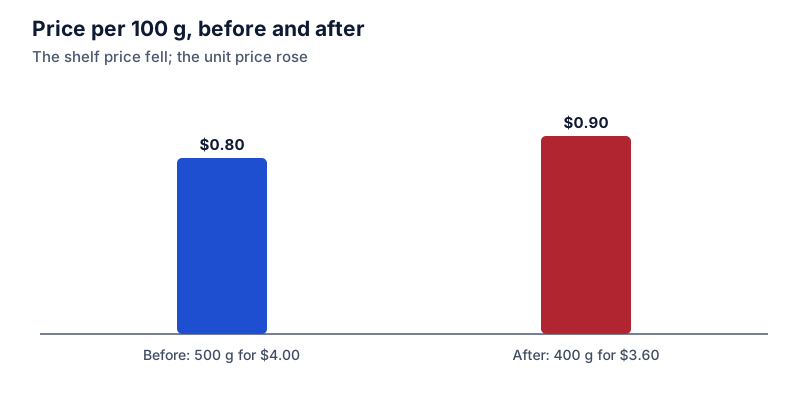
The shelf price fell 10%, but you’re paying 12.5% more for each gram.
When the price doesn’t change at all
If a 500 g pack becomes 450 g at the same $4.00, the price didn’t move, but the unit price rose. The shortcut:
unit-price increase = (old size ÷ new size − 1) × 100
Where price is unchanged
500 ÷ 450 = 1.111…, so the unit price is 11.1% higher.
Try it: Size ratio 450 g → 500 g
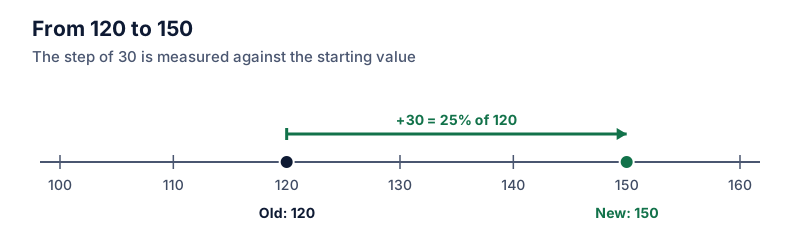
Open in calculatorNotice that the package shrank by 10% but the unit price rose by 11.1%. A 10% decrease in quantity isn’t undone by a 10% increase. That’s the same effect described in percentage increase and in reverse percentages.
Combining size and price changes
unit-price factor = price factor ÷ size factor
Where 0.9 ÷ 0.8 = 1.125, a 12.5% increase
The price factor is new price ÷ old price, and the size factor is new size ÷ old size.
Things to check
- Count-based products. Toilet paper and similar items can change sheet count or sheet size. Compare per sheet and, if you can, by area.
- Concentration. A detergent that claims to be “more concentrated” may need fewer doses. Compare cost per load.
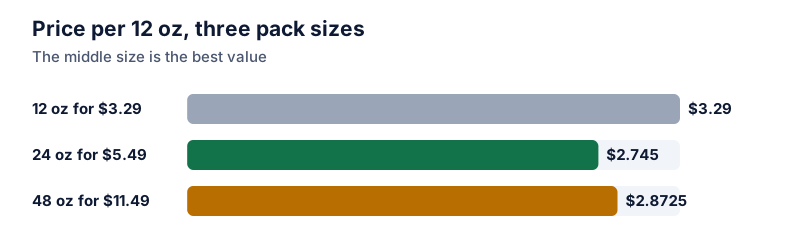
- Multipacks. A multipack isn’t always cheaper per unit than a single large pack.
- Different units on labels. Convert to the same unit before comparing: 1 oz is about 28.35 g.
Tracking it over time
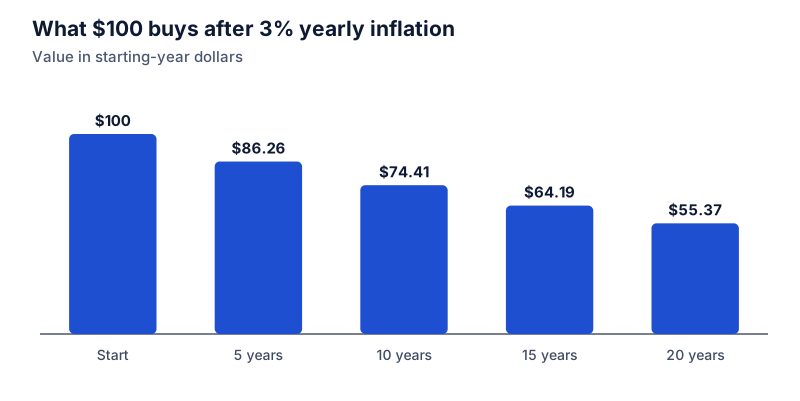
Keep the package size along with the price in any record of what you pay. The unit price comparison guide covers comparing different sizes on the shelf, and inflation and purchasing power covers what rising prices mean for your budget.
Questions
Is shrinkflation the same as inflation?
It’s one way price increases show up. Official price indexes generally try to account for package size changes, so a smaller package at the same price is treated as a price increase.
Where do I find the unit price?
Many stores print a unit price on the shelf label, such as per 100 g, per ounce or per liter. Check that both products use the same unit before comparing.
The calculator links in this guide are checked against the PercentSwift calculator every time the site is built. How we calculate explains the rounding rules. If you spot a mistake, email hello@percentswift.com.