What percent is X of Y? Turning a part and a total into a percentage
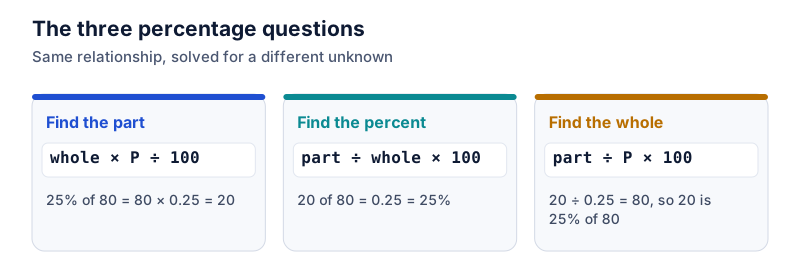
To find what percent X is of Y, divide X by Y and multiply by 100. The hard part is knowing which number is Y; here are tests for tricky wording.
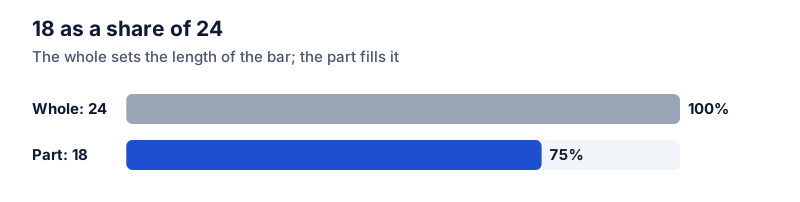
Divide the part by the whole and multiply by 100. 18 out of 24 is 18 ÷ 24 = 0.75, which is 75%. The whole is the number that follows “of” or “out of”, and it goes on the bottom.
On this page
Divide the part by the whole, then multiply by 100.
percentage = part ÷ whole × 100
18 out of 24 gives 18 ÷ 24 = 0.75, and 0.75 × 100 = 75%.
The arithmetic is short. Most mistakes come from putting the wrong number on the bottom, so most of this guide is about identifying the whole.
Try it: 18 is what percent of 24?
Open in calculatorWhich number is the whole?
The whole is the reference point, the thing you’re measuring against. A few tests help:
It follows “of” or “out of”. “What percent of 24 is 18?” and “18 out of 24” both put 24 on the bottom.
It’s the total, or the before value. If you scored 42 on a test marked out of 50, the 50 is the whole: 42 ÷ 50 = 84%.
Ask “percent of what?” If you can say “18 is 75% of 24”, the number after “of” is the whole. If saying it the other way sounds right (“24 is 133% of 18”), you’ve answered a different question.
Worked examples
Budget share. Rent is $1,350 of a $4,500 monthly take-home pay. 1,350 ÷ 4,500 = 0.3, so rent is 30% of pay.
Survey. 213 of 640 people chose option B. 213 ÷ 640 = 0.3328125, or about 33.3%.
Try it: 213 is what percent of 640?
Open in calculatorProgress. A 26.2-mile marathon runner has covered 9.5 miles. 9.5 ÷ 26.2 = 0.3626…, so about 36.3% of the course is done.
Tricky wording
“What percent of the class passed?” The class is the whole. If 27 of 30 passed, that’s 90%.
“A is what percent more than B?” This is a percentage change question, not a share. The whole is B, and you divide the difference by it. If A is 30 and B is 24, A is (30 − 24) ÷ 24 = 25% more than B. The guide on percentage increase covers this.
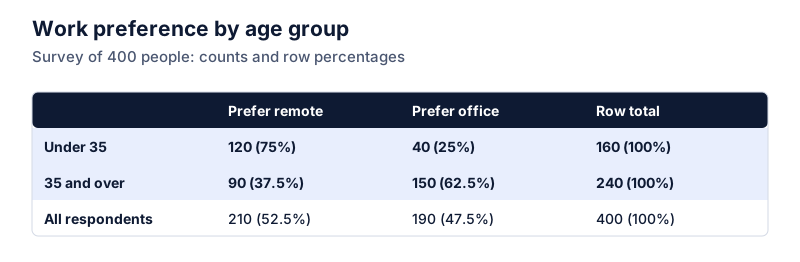
“What percent of the total does each group make up?” Each group is a part and the total of all groups is the whole. For a full table of these, see percentage of total in a table.
When the part is bigger
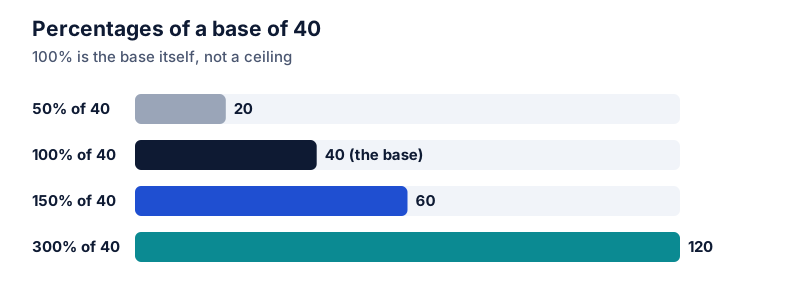
If the part is larger than the whole, the answer is over 100%. That’s correct arithmetic, and in some situations it’s the expected result. A store that sold 690 units against a target of 600 hit 690 ÷ 600 = 115% of target.
Try it: 690 is what percent of 600?
Open in calculatorIt’s a red flag when the whole should be the maximum, like a test score or the share of a group. If you get 125% for “what share of students passed”, the numbers are probably swapped. The guide to percentages over 100% goes through which situations allow it.
Rounding the result
Many answers don’t come out evenly. 1 out of 3 is 33.333…%. Round to whatever precision the situation needs: one decimal place is usual for survey results, whole numbers for test scores. If you’re rounding several shares of the same total, they may not add up to exactly 100%. That’s a rounding effect, not an error.
Questions
Can the answer be more than 100%?
Yes, when the part is larger than the whole. 30 is 150% of 20. Whether that makes sense depends on the situation: a test score can’t exceed 100%, but this year’s sales can be 150% of last year’s.
What if the whole is zero?
There’s no answer. Dividing by zero is undefined, so no percentage describes a part of nothing.
The calculator links in this guide are checked against the PercentSwift calculator every time the site is built. How we calculate explains the rounding rules. If you spot a mistake, email hello@percentswift.com.