Percentage points vs percent: what's the difference?
When a rate moves from 4% to 6%, it rose 2 percentage points and also 50%. What each number means, and how to report changes without misleading anyone.
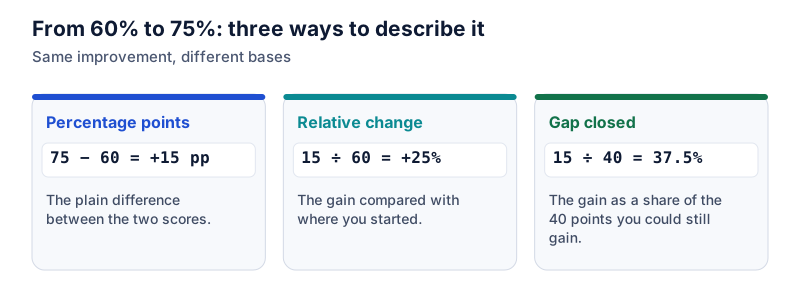
Percentage points are the plain difference between two percentages: 6% − 4% = 2 points. Percent change is relative to the starting rate: a 2-point rise from 4% is a 50% increase. Both are correct; they measure different things, so say which one you mean.
On this page
When the thing that changes is already a percentage, there are two ways to describe the change, and they give very different numbers.
A savings account rate goes from 4% to 6%:
- In percentage points, it rose 6 − 4 = 2 points.
- In percent, it rose (6 − 4) ÷ 4 = 0.5, a 50% increase.
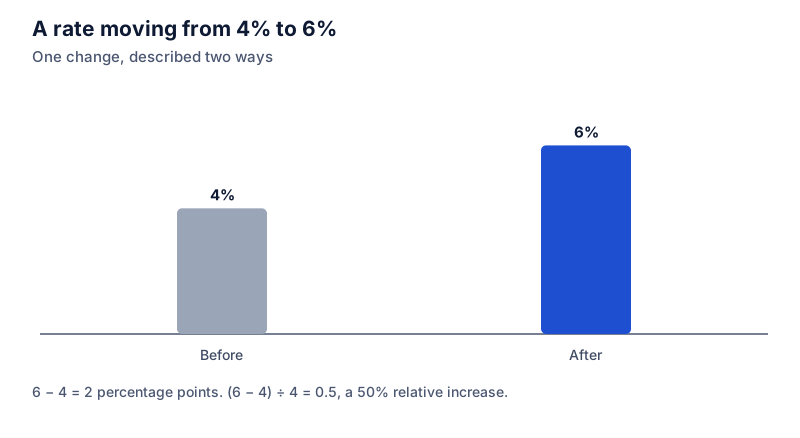
Try it: A rate moving from 4% to 6%
Open in calculatorWhat each one tells you
The percentage-point change is the absolute gap between the two rates. It answers “how much higher is the rate?”
The percent change is the size of that gap compared with the starting rate. It answers “how much bigger did the rate get, relative to where it was?”
Both are useful. A rise from 1% to 3% and a rise from 40% to 42% are both 2 points. But the first rate tripled (a 200% increase), while the second grew by 5%. If you’re paying interest on a loan, the jump from 1% to 3% triples your interest bill, which the point change alone doesn’t show.
How this misleads
Mixing the two is one of the most common ways percentages confuse people, sometimes by accident and sometimes not.
“Unemployment up 25%” sounds alarming. If it went from 4% to 5%, that’s a 1-point rise. Both headlines are accurate, but they leave different impressions.
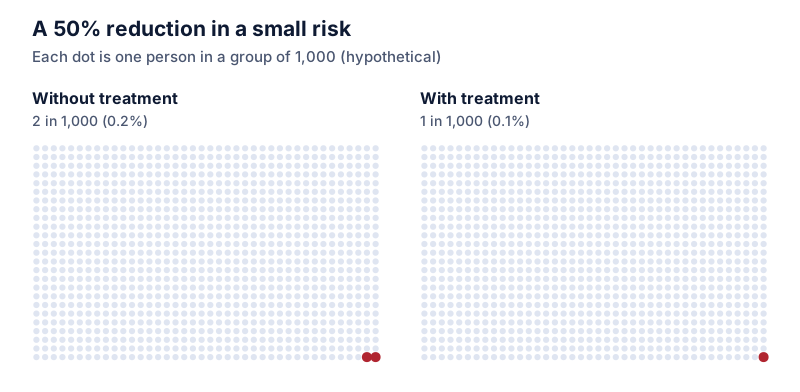
“Risk doubles” can mean a risk went from 0.01% to 0.02%: a 100% increase, but only 0.01 points. See relative risk vs absolute risk for how this plays out in health news.
“Support fell 3%” in a poll is ambiguous. If support went from 45% to 42%, that’s a 3-point drop and a 6.7% relative drop. The writer probably meant points but said percent.
Reporting changes clearly
- Say “percentage points” (or “points”) for the absolute difference between two rates.
- Say “percent” for the relative change.
- When in doubt, give both, along with the actual rates: “The rate rose from 4% to 6%, an increase of 2 percentage points.”
The last form is the hardest to misread, because the reader can see the two numbers.
Decreases work the same way
A mortgage rate falls from 7.5% to 6%. That’s a drop of 1.5 percentage points. Relative to 7.5%, it’s 1.5 ÷ 7.5 = a 20% decrease.
Try it: A rate falling from 7.5% to 6%
Open in calculatorWhere you’ll see points
Interest rates, tax rates, unemployment, inflation rates, election polls, test pass rates and market share are all percentages, so changes in them are naturally described in points. Finance uses an even smaller unit, the basis point, worth 0.01 percentage point. A central bank raising its rate by 25 basis points has raised it by a quarter of a point. The guide to basis points, per mille and ppm covers these units.
Questions
Is a basis point the same as a percentage point?
No. A basis point is one hundredth of a percentage point. A rate moving from 4.00% to 4.25% rose 25 basis points, or 0.25 percentage points.
Which should I use in a report?
For changes in rates such as interest, unemployment or poll shares, give the percentage-point change, and add the relative change if it helps. Always use the word “points” for the first one.
The calculator links in this guide are checked against the PercentSwift calculator every time the site is built. How we calculate explains the rounding rules. If you spot a mistake, email hello@percentswift.com.