Simple interest explained with worked examples
Simple interest is principal × rate × time. Worked examples for whole and partial years, what each variable means, and how it compares with compound interest.
Simple interest = principal × annual rate × years. $5,000 at 4% for 5 years earns 5,000 × 0.04 × 5 = $1,000, for a final balance of $6,000. Interest is paid only on the original principal, never on earlier interest.
On this page
Simple interest is interest calculated only on the amount you started with.
I = P × r × t
Where I is the interest, P the principal (starting amount), r the annual rate as a decimal, and t the time in years
A basic example
You deposit $5,000 at 4% simple interest for 5 years.
- Interest per year: 5,000 × 0.04 = $200
- Over 5 years: $200 × 5 = $1,000
- Final balance: $5,000 + $1,000 = $6,000
Try it: One year’s interest: 4% of $5,000
Open in calculator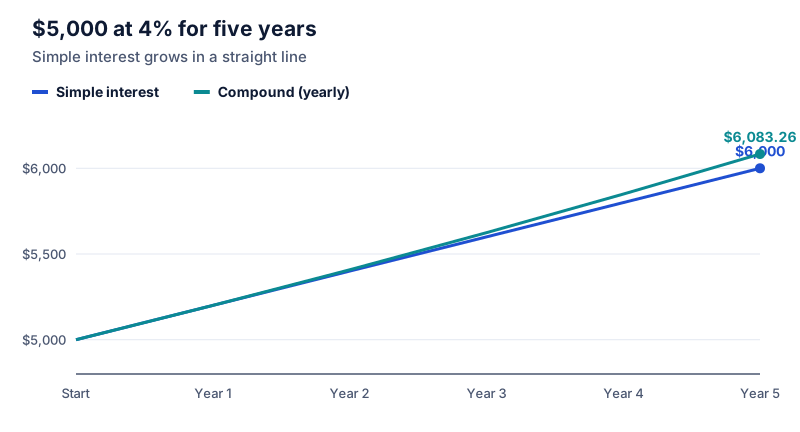
Partial years
Express the time as a fraction of a year.
9 months: t = 9 ÷ 12 = 0.75. Interest = 5,000 × 0.04 × 0.75 = $150.
90 days: t = 90 ÷ 365. Interest = 5,000 × 0.04 × 90 ÷ 365 = $49.32. Some lenders use a 360-day year, which gives 5,000 × 0.04 × 90 ÷ 360 = $50.00. The loan documents say which convention applies.
Try it: Nine months at 4% is 3% of $5,000
Open in calculatorSolving for other variables
The same formula rearranges to find any missing piece:
- Rate: r = I ÷ (P × t). $450 interest on $3,000 over 3 years: 450 ÷ 9,000 = 5%.
- Time: t = I ÷ (P × r). How long for $2,000 at 6% to earn $300? 300 ÷ 120 = 2.5 years.
- Principal: P = I ÷ (r × t). What deposit earns $500 in 4 years at 5%? 500 ÷ 0.2 = $2,500.
Simple vs compound
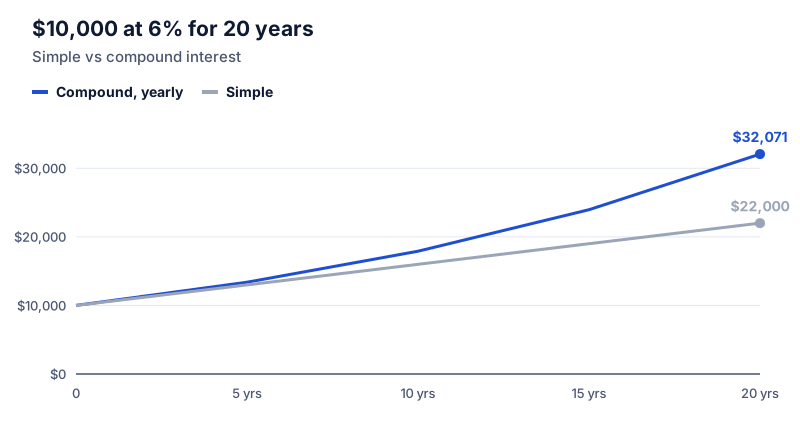
With compound interest, each year’s interest is added to the balance and earns interest itself. At 4% over 5 years, $5,000 becomes $6,083.26 with yearly compounding, compared with $6,000 under simple interest.
The gap is small over a few years at low rates and large over long periods. Over 30 years at 4%, simple interest turns $5,000 into $11,000, while yearly compounding produces about $16,217. The compound interest guide has the formula and a year-by-year table.
Simple interest on loans
For a borrower, simple interest is usually cheaper than compound interest at the same rate, because interest doesn’t build on interest. On an amortizing loan, where each payment reduces the principal, interest is calculated on the remaining balance, so the total interest is less than P × r × t on the original amount.
Rates are usually annual
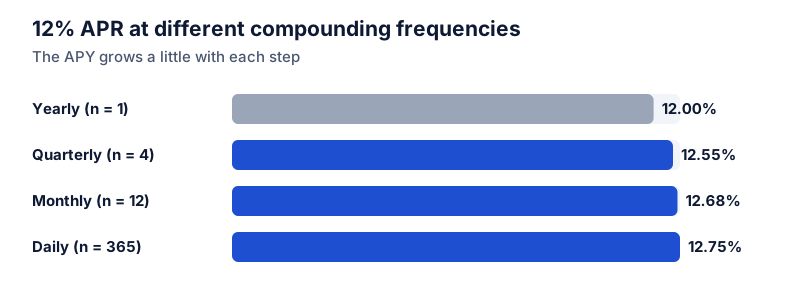
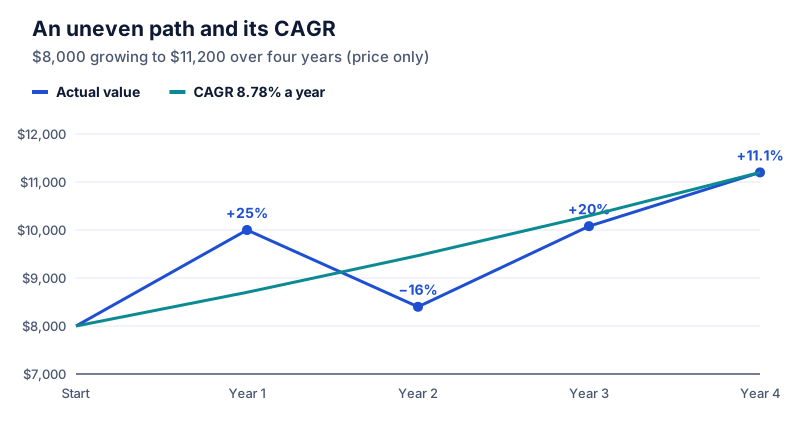
A rate quoted without a period is almost always per year. A monthly rate of 1% is not the same as 12% a year once compounding is involved. See APR vs APY for how quoted rates relate to what you actually pay or earn. For returns on investments, which compound, see investment return and CAGR.
Questions
Where is simple interest used?
Some car loans, short-term personal loans, bonds paying fixed coupons, and certain savings products. Most savings accounts and credit cards compound.
How do I find the rate if I know the interest?
Rate = interest ÷ (principal × years). $450 of interest on $3,000 over 3 years is 450 ÷ 9,000 = 0.05, or 5% a year.
The calculator links in this guide are checked against the PercentSwift calculator every time the site is built. How we calculate explains the rounding rules. If you spot a mistake, email hello@percentswift.com.