How to calculate profit margin
Profit margin is profit divided by revenue, times 100. Gross, operating and net margin worked from one income statement, plus the per-product version.
Profit margin = profit ÷ revenue × 100. A product that costs $18 and sells for $30 makes $12 profit, a 40% margin. For a business, gross margin uses revenue minus cost of goods sold, operating margin also subtracts operating expenses, and net margin subtracts everything, including interest and tax.
On this page
Profit margin tells you how much of each dollar of sales you keep as profit.
profit margin = (revenue − costs) ÷ revenue × 100
For a single product
A product costs $18 to make or buy and sells for $30. Profit per unit is $12, and 12 ÷ 30 = 40%.
Try it: Cost $18, price $30
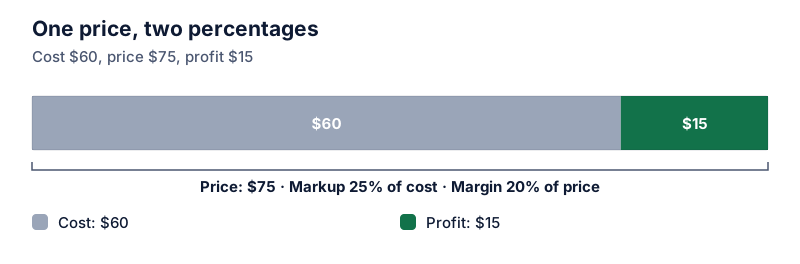
Open in calculatorThe margin divides by the price, not the cost. Dividing by cost gives the markup (66.7% here), a different number that’s easy to mix up. See markup vs margin.
For a whole business
An income statement lets you calculate margin at three levels:
| Line | Amount | Margin |
|---|---|---|
| Revenue | $500,000 | |
| Cost of goods sold | −$300,000 | |
| Gross profit | $200,000 | 40% |
| Operating expenses | −$120,000 | |
| Operating profit | $80,000 | 16% |
| Interest and tax | −$25,000 | |
| Net profit | $55,000 | 11% |
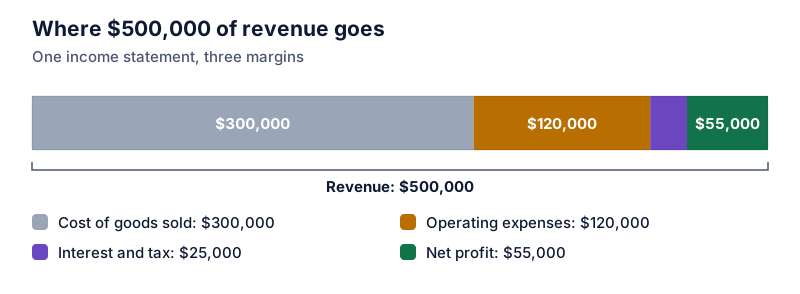
Gross margin (40%) shows how much the products themselves earn after their direct costs: materials, manufacturing, or the wholesale price.
Operating margin (16%) also covers rent, salaries, marketing and other running costs. It shows how profitable the business is at what it does.
Net margin (11%) is the bottom line, after everything, including interest on debt and taxes.
Try it: Gross margin: revenue $500,000, COGS $300,000
Open in calculatorChanges in margin are in points
If gross margin goes from 40% to 37%, it fell 3 percentage points. Saying it “fell 3%” is ambiguous. On $500,000 of revenue, each point of margin is $5,000 of profit.
Why margin matters for pricing
Margin tells you how much a discount costs. At a 40% margin, a 10% price cut on the $30 product brings the price to $27 and the profit to $9, a 25% drop in profit per unit. To earn the same total profit, you’d need to sell a third more units. See price for a target margin for setting prices from costs.
Margin vs profit
A high margin on a few sales can earn less than a low margin on many. A $30 product at 40% margin earns $12 a unit; a $200 product at 15% earns $30. Margin is a ratio; profit is the dollar amount. You need both.
Contribution margin
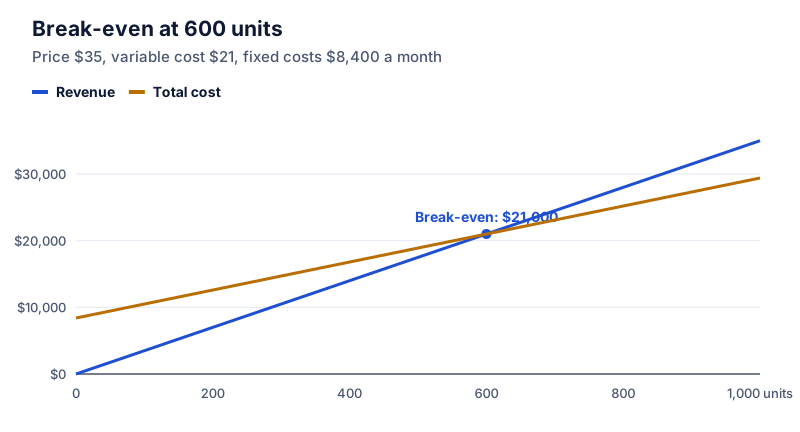
For decisions about pricing and volume, businesses often look at the contribution margin: price minus variable costs only. It tells you how much each sale contributes toward fixed costs. See contribution margin ratio and break-even.
Questions
Is a higher margin always better?
For the same business, usually. Across industries, margins vary widely: grocery stores run on thin margins and high volume, while software companies often have high gross margins. Compare with similar businesses.
Can profit margin be negative?
Yes. If costs exceed revenue, profit is negative and so is the margin. A −5% net margin means the business lost 5 cents on every dollar of sales.
The calculator links in this guide are checked against the PercentSwift calculator every time the site is built. How we calculate explains the rounding rules. If you spot a mistake, email hello@percentswift.com.