Annual vs monthly plans: what percentage do you really save?
Compare an annual plan with twelve monthly payments to get the real percentage saved, convert months-free offers, and find the month where annual starts paying off.
Multiply the monthly price by 12, then compare: (12 × monthly − annual) ÷ (12 × monthly) × 100. A $12.99 monthly plan costs $155.88 a year, so a $119.99 annual plan saves about 23%. “2 months free” on an annual plan is a 16.7% saving, not 20%.
On this page
Subscription services usually offer a lower price for paying a year upfront. To see how much lower, compare the annual price with twelve months of the monthly price.
saving % = (12 × monthly − annual) ÷ (12 × monthly) × 100
Example
Monthly: $12.99. Annual: $119.99.
Twelve months at $12.99 = $155.88. The saving is $155.88 − $119.99 = $35.89, and 35.89 ÷ 155.88 = 0.2302. That’s about 23% off.
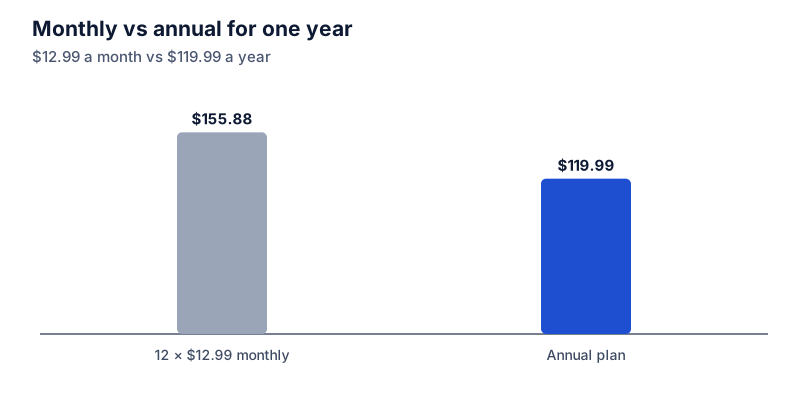
Try it: $155.88 a year monthly vs $119.99 annual
Open in calculator“Get 2 months free”
An annual plan advertised as “2 months free” charges for 10 months and gives you 12. You pay 10/12 of the monthly total, a saving of 2/12 = 16.7%, not 20%.
The same logic applies to other versions:
| Offer | You pay for | Saving |
|---|---|---|
| 1 month free | 11 of 12 | 8.3% |
| 2 months free | 10 of 12 | 16.7% |
| 3 months free | 9 of 12 | 25% |
| 4 months free | 8 of 12 | 33.3% |
The break-even month
The annual plan only saves money if you’d have kept paying monthly for long enough. Divide the annual price by the monthly price:
119.99 ÷ 12.99 = 9.24
So the annual plan pays off once you’d have stayed more than 9 months. If there’s a real chance you’ll cancel within 9 months, monthly is the safer choice.
Monthly prices that are “billed annually”
Some pricing pages show “$9.99/month, billed annually.” That’s the annual price divided by 12 ($119.88), not the monthly plan’s price. Find the real month-to-month price before comparing.
Try it: $14.99 monthly vs $9.99 a month billed annually
Open in calculatorIn that example, if the month-to-month plan is $14.99, the annual option saves (14.99 − 9.99) ÷ 14.99 = about 33%.
Other things to weigh
- Refunds. Some annual plans refund unused months if you cancel; many don’t.
- Price changes. An annual plan locks the price for the year. Monthly prices can rise mid-year.
- Renewal price. Introductory annual prices often renew higher. Calculate the saving at the renewal price too.
- Cash flow. Paying $120 at once isn’t the same as $13 a month if money is tight.
The general idea
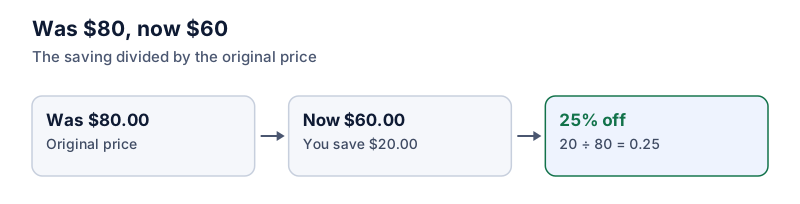
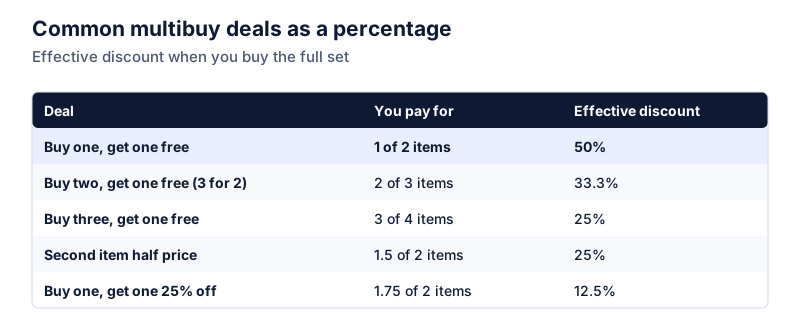
A “months free” offer is a multibuy in disguise, the same as “buy two, get one free”. The guide on multibuy deals as a percentage covers the pattern, and discount percentage from two prices explains the core calculation.
Questions
When is monthly better?
When there’s a real chance you’ll cancel before the annual plan pays off. If you’d stop after 8 months on the example plan, monthly costs $103.92, less than the $119.99 annual price.
Do annual plans renew automatically?
Usually, often at the full list price rather than an introductory one. Note the renewal date and price when you sign up.
The calculator links in this guide are checked against the PercentSwift calculator every time the site is built. How we calculate explains the rounding rules. If you spot a mistake, email hello@percentswift.com.